Why Does My Dishwasher Smell Bad Even After Cleaning?
If the dishwasher still smells after cleaning, the odor source is often trapped food residue, moisture or mildew, or drain backflow; if the smell returns within a day, the drain path and air gap or hose are worth checking first. Ignoring it can leave dishes smelling worse and can point to a drainage problem that keeps dirty water in the tub. This guide helps you identify the smell pattern and match it to the right fix.
Odor diagnosis matrix
Use the smell itself as the clue. Most dishwasher stink problems can be narrowed down in 10 minutes and improved in 48 hours, but only if you separate residue from moisture from backflow instead of repeating the same cleaning routine. Start by smelling the bottom center, gasket, and filter area with the door open.
| Smell type | Likely source | What you will see or smell | Quick test | First fix |
|---|---|---|---|---|
| Sour | Trapped food, biofilm, or dirty filter | Gray paste, slime, grit, seeds, labels, or a sour note near the filter | Open the door and smell the filter area after a cycle | Remove the filter per the manual, then rinse or scrub it with hot soapy water |
| Musty | Moisture sitting in gasket areas | Rubber seal corners feel damp or show mildew | Wipe the door gasket, then smell again after drying | Wipe and dry the gasket corners thoroughly, then leave the door ajar |
| Rotten-egg or sewer-like | Drain backflow, hose issue, or garbage disposal connection | Standing water, dirty-water smell, or odor that comes back right after a wash | Run a stop-and-wait test and check for standing water | Check the drain hose, disposal connection, and installation for kinks or bad routing |
| Lingering dirty-dish odor | Spray-arm debris, sump sludge, detergent residue, or low-temp washing | Food smell on dishes after the drying cycle | Inspect spray arm holes and the sump beneath the filter | Flush the spray arms, clean the sump, then run a hot empty cycle |
Why does my dishwasher smell bad even after cleaning?
The smell usually survives because the source is hiding in parts that do not get hit by a quick wipe: the filter, sump, gasket corners, spray arms, drain path, or standing water. Cleaned surfaces can still leave odor behind if biofilm or sludge remains in damp spots. If the smell returns right away, drainage deserves more attention than the tub interior.
When the odor returns
If the smell is present immediately after a wash, it often points to residue, biofilm, or backflow. If it shows up after about 24 to 48 hours, moisture retention is more likely, especially around the gasket and closed-door tub. A common first-timer mistake is repeating a vinegar cycle when the real issue is a kinked drain hose or a clogged disposal connection.
Open and smell the hot spots. Check the bottom center, gasket, and filter area with the door open, since those are the first places odor concentrates. WellZenx recommends that specific smell check because it separates surface odor from drainage odor.
Remove the filter. Follow the manual for removal, then rinse or scrub it with hot soapy water. Cleanipedia identifies the filter as a common odor source, and newer dishwashers often rely on filters rather than food disposals.
Dry the gasket corners. Wipe the rubber seal, especially the corners, where biofilm and mildew often sit in a damp warm strip. Musty odors often come from moisture sitting in gasket areas.
What you’ll need
- Dishwasher manual
- Soft brush or old toothbrush
- Hot water
- Dish soap
- Clean cloths or paper towels
- White vinegar
- Baking soda
- Flashlight
- Gloves, if the filter or sump has sludge
Clean the usual odor reservoirs
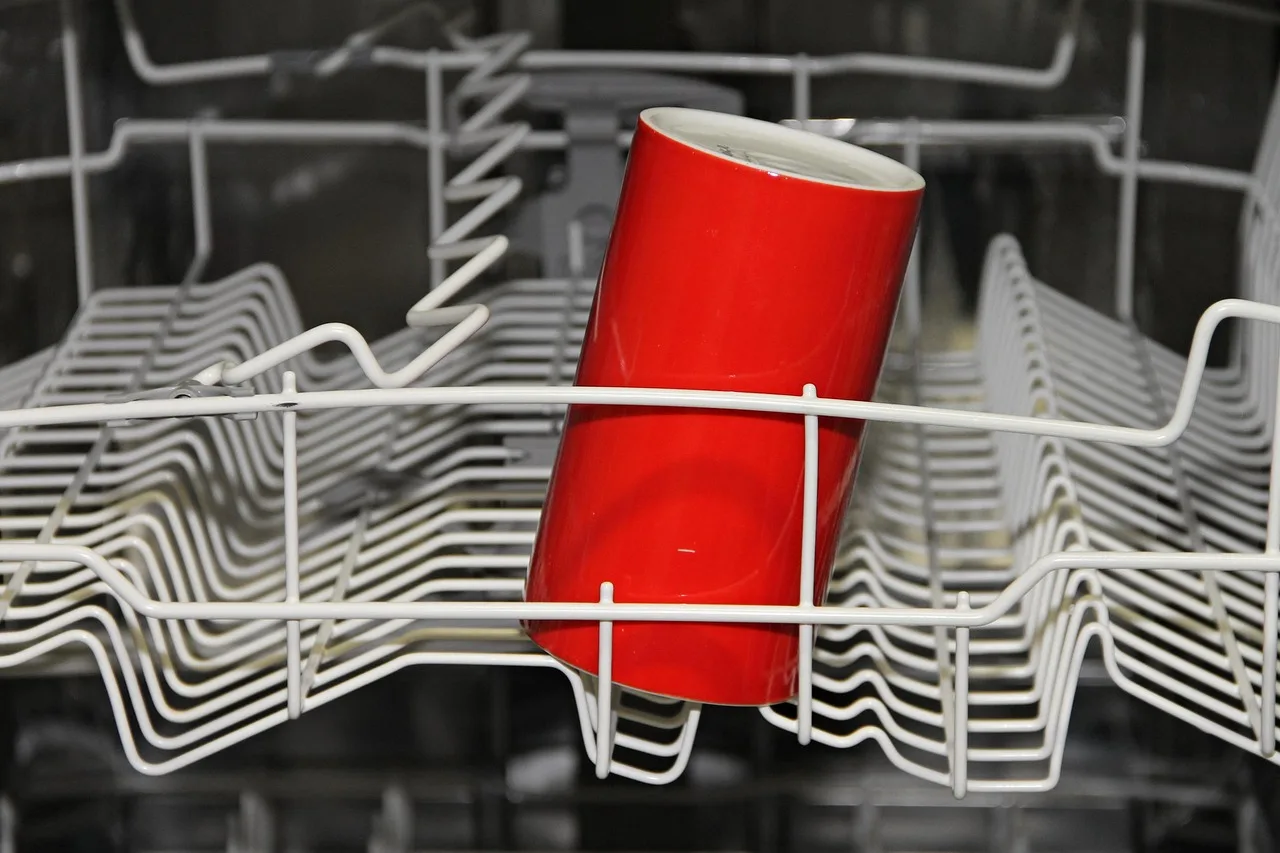
Start with the parts that trap debris, then move to the parts that hold moisture. Biofilm forms as a thin greasy microbial layer in damp warm areas, so a rinse alone often is not enough. If the odor seems sour or dirty-dish-like, clean these parts before you spend time on the drain path.
Flush the spray arms. Remove them only if the manual allows it, then clear the small holes with water, a brush, or a wooden pick. Food bits can clog the holes and leave odor-causing debris inside the arm.
Inspect the sump area. Lift out the filter and check the bottom reservoir beneath it for gunk and sludge. This area often holds the heaviest residue during a deep clean.
Run a vinegar cycle. Place white vinegar in a dishwasher-safe container on the top rack and run a separate empty cycle. Do not mix vinegar with bleach. Cleanipedia recommends an empty hot cycle after interior cleaning.
Add a baking soda cycle. Sprinkle baking soda in the bottom or use it as a paste on odor-prone surfaces, then run a separate cycle. It helps with odor and residue, especially after the vinegar rinse has broken up buildup.
Say your dishwasher smells sour after a normal load, but the filter is mostly clear. That pattern points to spray-arm debris or sump sludge, so the next check should be the bottom reservoir and the arm holes, not another filter rinse.
Check the drain path for backflow
If the odor returns right after a wash, inspect the drain path before repeating any cleaning cycle. Standing water is a sign of a drain or backflow problem, and dirty water can move back into the tub if the hose is kinked or installed poorly. Real Homes warns that an improperly connected drain hose can send dirty water backward.
Run a stop-and-wait test. Start a cycle, pause it, and check the bottom of the tub for standing water after the machine should have drained. Standing water after a stop-and-wait test suggests a drain or backflow issue.
Inspect the drain hose. Trace the hose for kinks, low spots, or poor routing behind the unit. If the hose sags, dirty water can sit there and return to the tub later.
Clean the disposal connection. If the dishwasher drains into a garbage disposal, remove trapped food from the disposal inlet and run water through it. Trapped food there can send odor back into the dishwasher.
Check for repeat standing water. If water remains after the drain test, stop treating this as a surface odor problem. That points to plumbing or installation, not just residue in the tub.
Suppose a renter notices a sewer-like smell after a 45-minute cycle and sees a shallow puddle in the bottom. That combination is stronger evidence for drain backflow than for a dirty filter, so the hose and disposal connection deserve the next look.
Why does my dishwasher smell bad after a wash?
A smell that shows up after washing often points to what the cycle left behind: detergent residue, low-temperature washing, or moisture trapped by a closed door. Eco cycles can leave more moisture and residue if the load was greasy or if the tub stays sealed after the cycle ends. The issue is not that eco cycles are bad; it is that damp residue can linger.
Use a hotter empty cycle. After cleaning the filter and seals, run the dishwasher empty on the hottest setting. That helps clear residue that cooler cycles may leave behind.
Open the door after cycles. Leave the door slightly ajar after a wash so moisture does not sit on the gasket and tub walls. That reduces the damp conditions that feed mildew-like odors.
Check detergent dose. If dishes feel tacky or smell like soap, reduce the detergent dose to the package range and recheck after one load. Excess detergent can leave residue that holds odor.
Common mistakes
Most repeat-smell problems come from treating every odor the same way. A vinegar cycle will not fix a kinked hose, and a new filter will not solve standing water. Keep the diagnosis tied to the smell pattern so you do not repeat the wrong fix.
- Cleaning the filter but skipping the gasket corners, where mildew often stays.
- Ignoring spray-arm holes that still hold food bits after the tub looks clean.
- Assuming a musty smell is the same as a sewer-like smell.
- Running vinegar and bleach together. Do not mix them.
- Leaving the door closed after a cycle when moisture is the real problem.
- Using eco cycles only, then blaming odor on the machine instead of on residue and dampness.
For households using eco cycles only, add one hotter empty cycle after cleaning the filter and seals, then leave the door ajar until the tub is dry. That one change often separates a moisture problem from a drainage problem.
Frequently asked questions
Why does my dishwasher smell bad even after cleaning filter?
The filter is only one odor reservoir. If the smell remains after cleaning it, inspect the sump, spray arms, and drain path next. The same source notes that the filter is a common source, but sour or sewer-like odor can still come from standing water or a backflow issue.
Why does my dishwasher smell bad after washing dishes?
That pattern often points to residue left behind by a cycle that did not get hot enough, or to moisture trapped after the wash. Run the machine empty on the hottest setting, then leave the door ajar. If dishes still smell dirty, inspect the spray arms and sump.
Why is my dishwasher smelling bad even after cleaning?
Bad odor after cleaning usually comes from biofilm in damp places, trapped food in the filter area, or dirty-water backflow. WellZenx groups those into trapped food, biofilm, and backflow. If standing water is present, the drain path should move to the top of the list.
How to get the odor out of my dishwasher
Use a targeted sequence: clean the filter with hot soapy water, wipe and dry the gasket, flush the spray arms, then run separate vinegar and baking soda cycles. If the smell comes back quickly, check the drain hose and disposal connection instead of repeating the same cycle.