How to Prevent a Dishwasher From Smelling Between Washes
Run a hot rinse, empty the filter, and leave the door ajar for at least about 30 minutes after each cycle. If the dishwasher sits longer than 24 hours, crack it open again and check for trapped water. Skip that routine, and food residue, damp gaskets, and standing water can sour the air and spread odor to dishes and the kitchen. This guide gives you a 48-hour maintenance system: what to do right after a wash, what to do between loads, and what to check weekly.
What you’ll need
- Soft brush or old toothbrush
- Warm water
- Mild dish soap
- White vinegar
- Baking soda
- Dishwasher cleaner
- Clean microfiber cloth or sponge
- Paper towel for checking standing water
How do you keep a dishwasher from smelling between washes?
Do not let moisture, residue, or trapped debris sit in place. After every cycle, let the tub dry, clear the filter if needed, and leave the dishwasher door slightly ajar. If the machine sits unused for a day or two, check for standing water, residue at the gasket, and clogged spray holes.
Do this after every cycle
- Open the dishwasher door 2 to 4 inches after the cycle ends.
- Wait at least 30 minutes so steam can escape.
- Wipe visible droplets from the door lip and lower edge.
Do this every 2 to 3 days
- Pull out the lower rack and inspect the dishwasher filter at the bottom.
- Rinse loose debris from the filter with warm water and a soft brush.
- Check the tub for standing water and remove it if present.
Do this weekly
- Wipe the door gasket, door lip, and visible interior edges.
- Check spray arms for blocked holes and clear them if needed.
- Run an empty cleaning cycle if a light odor keeps returning.
Top Ten Reviews recommends starting with a vinegar cycle, then running a baking soda cycle, both empty. That order works well when the smell is stale or greasy rather than tied to drainage. If odor returns quickly, move to the drain checks below instead of repeating surface cleaning.
What should you do every few days?
Focus on the parts that hold the most food debris and moisture: the filter, the drain area, and the spray arms. Good Housekeeping says to clean the dishwasher filter about once a week, but a quick rinse every 2 to 3 days helps in homes that run short or eco cycles and leave the machine closed between loads.
Rinse the filter at the bottom
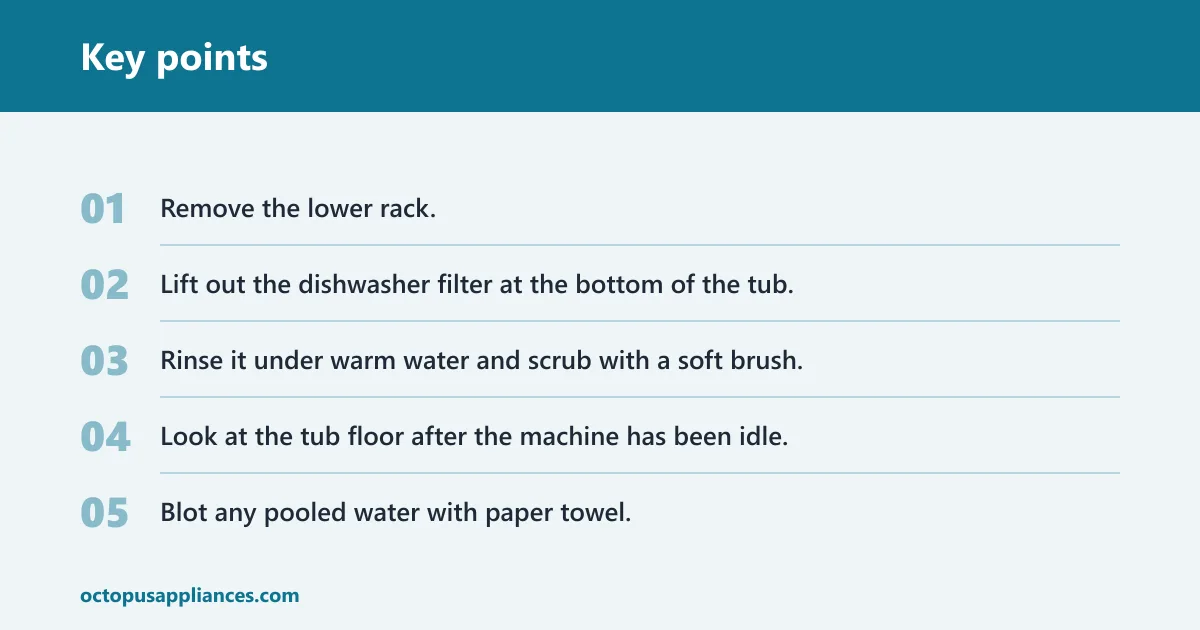
- Remove the lower rack.
- Lift out the dishwasher filter at the bottom of the tub.
- Rinse it under warm water and scrub with a soft brush.
Check for standing water
- Look at the tub floor after the machine has been idle.
- Blot any pooled water with paper towel.
- If water returns after another cycle, treat it as a drain warning sign.
Inspect the drain area and spray arms
- Check the drain opening for scraps or greasy film.
- Clear blocked spray holes with a toothpick or small brush.
- Run a short rinse cycle if the arms look clean but smell remains.
Suppose a household runs the dishwasher every third day on a 45-minute eco cycle. The filter can hold fine food particles long enough to sour the tub, especially if the door stays closed after the cycle. In that case, the 2 to 3 day rinse matters more than a monthly deep clean.
Dishwasher odor checklist
Use this checklist as a maintenance system, not a rescue plan. The goal is to stop odor before it has time to build, and to separate ordinary stale smells from drain or plumbing trouble early.
| Cadence | Exact action | Estimated time | Red-flag guidance |
|---|---|---|---|
| After every cycle | Open the door 2 to 4 inches, let steam escape for at least 30 minutes, wipe the door lip, and check the floor of the tub for pooled water. | 3 to 5 minutes | If water remains in the tub after the cycle ends, suspect a drainage issue rather than normal buildup. |
| Every 2 to 3 days | Remove and rinse the filter with warm water and a soft brush, then inspect the drain opening and spray arms for debris. | 5 to 10 minutes | If the smell returns within about 24 to 48 hours, inspect the drain hose and disposal connection. |
| Weekly | Wipe the door gasket, door lip, and lower edge; check spray-arm holes; clean residue from visible seams; leave the door slightly ajar after the cycle. | 10 to 15 minutes | If the odor is sewage-like, musty despite cleaning, or paired with slow draining, stop treating it as routine grime. |
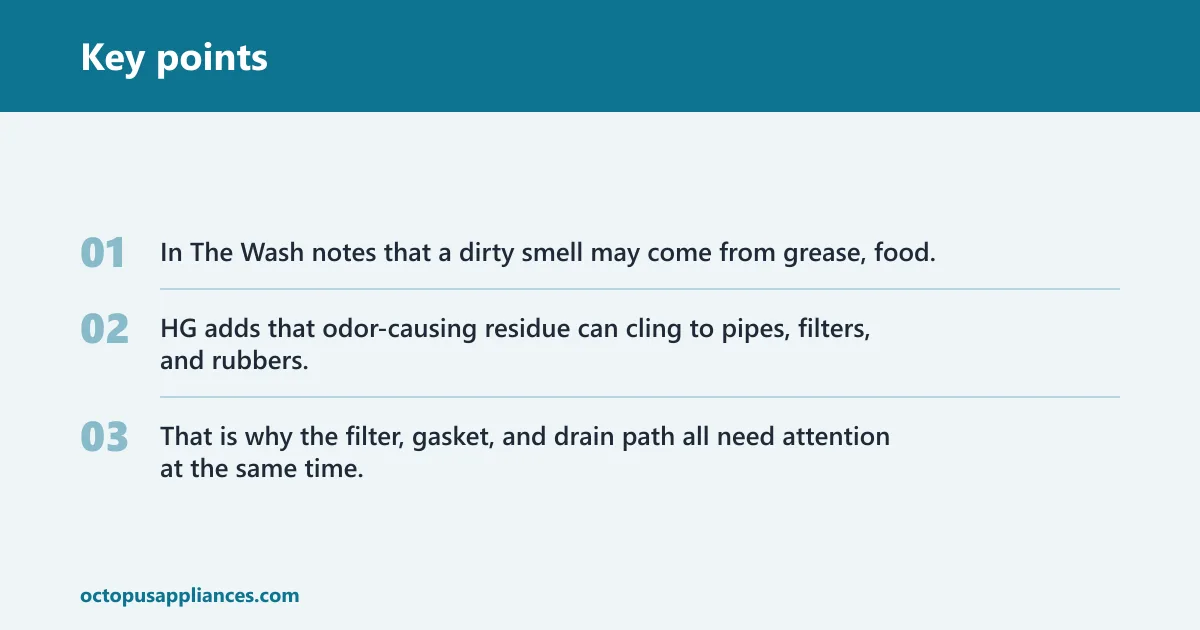
In The Wash notes that a dirty smell may come from grease, food, and soap or mineral deposits. HG adds that odor-causing residue can cling to pipes, filters, and rubbers. That is why the filter, gasket, and drain path all need attention at the same time.
What if the smell comes back within 48 hours?
If odor returns that quickly, the problem is often lower in the system than the visible tub surfaces. Check the drain, the drain hose, and the garbage disposal connection before repeating vinegar or baking soda cycles. Those cleaning steps help with residue, but they do not fix a blockage or a standing-water problem.
Check the drain and drain hose
- Inspect the drain opening for scraps, grease, or mineral film.
- Use a toothpick, brush, or wet/dry vacuum for debris if the opening is accessible.
- Look for kinks or a low spot in the drain hose if odor and drainage problems continue.
Inspect the garbage disposal connection
- Run the disposal with water for 20 to 30 seconds.
- Check whether the dishwasher hose shares a dirty or clogged connection point.
- Clean the disposal inlet if sink odors seem to travel into the dishwasher.
Say your dishwasher finishes a normal cycle, but by the next evening the tub smells sour again even after a filter rinse. That pattern points away from surface grime and toward trapped water, a drain clog, or a dirty disposal connection. Persistent sewage-type odor may indicate a plumbing issue, not a cleaning issue.
Why does my dishwasher always smell even when it was recently cleaned?
A recently cleaned dishwasher can still smell if moisture is trapped, residue remains in the drain path, or the machine dries poorly after a short cycle. Low-temperature and eco cycles leave more water behind, and a closed door lets that moisture feed mildew and stale odor.
Check for drying problems
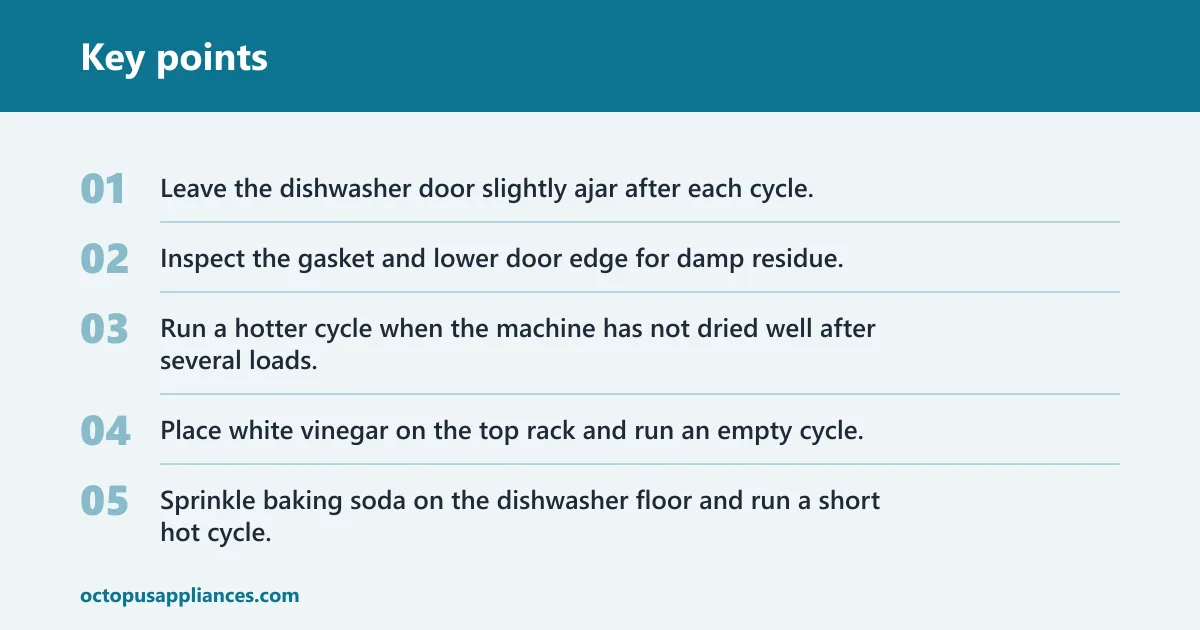
- Leave the dishwasher door slightly ajar after each cycle.
- Inspect the gasket and lower door edge for damp residue.
- Run a hotter cycle when the machine has not dried well after several loads.
Use vinegar, baking soda, or a cleaner in the right order
- Place white vinegar on the top rack and run an empty cycle.
- Sprinkle baking soda on the dishwasher floor and run a short hot cycle.
- Use a dishwasher cleaner for monthly maintenance or deeper cleaning.
The same source recommends leaving the dishwasher door slightly ajar after a cycle. That step matters more for households that run the machine every few days, because warm moisture can sit long enough for odor to return.
How can I keep my dishwasher smelling fresh between washes naturally?
Use air, hot water, and basic cleaners before stronger products. Leave the door open slightly, rinse the filter with warm water, and use white vinegar or baking soda only on an empty dishwasher. Natural steps help with freshening, but they will not fix standing water or sewage smells.
Use white vinegar for light buildup
- Place a cup of white vinegar on the top rack.
- Run the dishwasher empty on a hot cycle.
- Let the door stay ajar after the cycle ends.
Use baking soda for a quick refresh
- Sprinkle baking soda on the dishwasher floor.
- Run a short hot cycle with no dishes inside.
- Repeat only if the odor is mild and not drainage-related.
The same source says to run the dishwasher empty during cleaning steps, which matters here. Cleaner cycles work on surfaces and residue, but they should not replace the routine checks for the filter, gasket, spray arms, and drain.
Common mistakes
Most odor problems persist because one wet, dirty spot gets ignored. The filter, gasket, drain path, and tub floor all need attention on a schedule.
- Leaving food debris in the filter. Clean it before particles dry and cling to the mesh.
- Keeping the door shut after a humid cycle. Open it slightly so moisture escapes.
- Skipping the gasket and door lip. Wipe them weekly because residue collects there.
- Ignoring repeated sewage-like odor. Treat that as a drain or plumbing warning, not routine buildup.
- Assuming vinegar fixes every smell. It helps with grime, but it will not clear a clogged hose.
In The Wash identifies mould as a cause in a warm, moist dishwasher, and that is why the dry-down step matters. If the machine sits closed for days, even a clean interior can turn stale again.
Frequently asked questions
How do I keep my dishwasher from smelling between washes?
Open the door slightly after each cycle, wipe the door lip, and clean the filter every 2 to 3 days if the machine sits unused. Add a weekly gasket wipe and spray-arm check. That schedule stops moisture and residue from staying in the tub long enough to smell.
How do I stop my dishwasher from smelling if I only run it every few days?
Do not let standing water sit after the cycle. Open the door for drying, rinse the filter every 2 to 3 days, and wipe the gasket weekly. That routine is especially useful for eco or short cycles that leave more moisture behind.
What should I do if my dishwasher smells like sewage between washes?
Stop treating it like normal food residue. Check the drain, drain hose, and garbage disposal connection first, then run water through the disposal if it shares a line. If the odor persists or drainage is slow, service may be needed.
How often should I clean the filter to prevent dishwasher smells?
The same source says about once a week, and that is a solid baseline for many homes. If the dishwasher runs only every few days, a quick rinse every 2 to 3 days can help keep debris from drying in place and souring the tub.