Why Is My AC Not Cooling but the Fan Is Running?

If the blower runs but the AC is not cooling, the fault is usually on the outdoor side of the system: a power loss, a tripped breaker, a failed capacitor, or a compressor that is not starting. The fan and the cooling circuit are separate, so air can still move through the house while refrigerant flow has stopped.
That symptom can also point to restricted airflow, a frozen evaporator coil, or low refrigerant from a leak. The outdoor unit’s behavior gives the best clue: running, silent, humming, or tripping. That narrow read tells you what you can safely check and when to stop.
Common AC symptoms and next steps
AC symptom decision table
| Symptom combination | What it most likely means | What you can safely check | When to stop and call a pro |
|---|---|---|---|
| Fan runs, thermostat set to Fan, not Cool | The system is moving air only, not calling for cooling. | Set the thermostat to Cool, and set the fan to Auto instead of On. Lower the setpoint below room temperature. | If cool mode is set correctly and the unit still blows warm air, move on to the outdoor unit checks. |
| Weak airflow from vents | A clogged or dirty filter is restricting airflow, which can reduce cooling and raise coil temperature. | Inspect the air filter and replace it if dirty. A common cadence is every 1 to 3 months. | If airflow stays weak after a new filter, the issue may be in the coil, blower, or ductwork. |
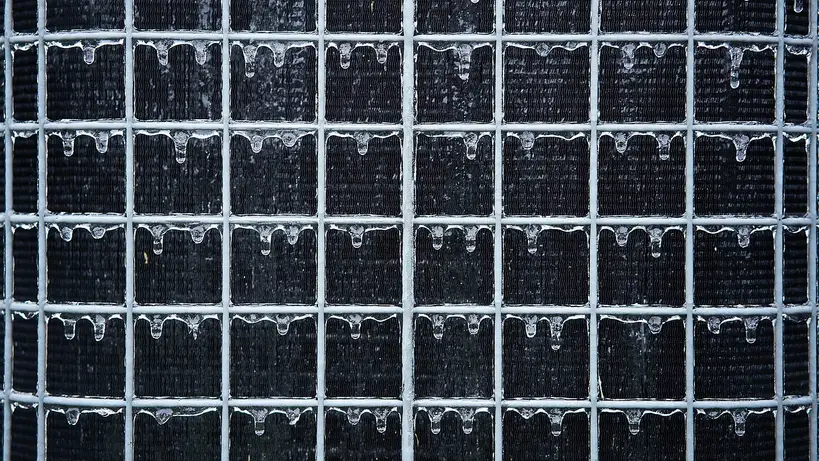
| Ice on lines or coil | Restricted airflow or low refrigerant may have frozen the evaporator coil. | Turn the system off and let it thaw before restarting. Run fan-only if needed to help dry the coil. | If ice returns after thawing, do not keep restarting the system. |
| Outdoor unit silent | Power loss, a breaker trip, a bad capacitor, or a compressor problem may be stopping the outdoor unit. | Check the outdoor breaker once and inspect the area around the condenser for blocked clearance or debris. | If the breaker trips again, or the unit stays silent, stop resetting it and call for service. |
| Outdoor unit humming | The compressor or start components may be trying to start but failing. | Look for debris around the condenser and listen for whether the fan starts. | If the humming repeats, or the fan never starts, the problem may be the capacitor or compressor. |
| Breaker trips | The outdoor circuit is overloading or has an electrical fault. | Reset the breaker once only. Note whether the unit runs briefly or trips immediately again. | Repeat trips mean a deeper fault. Stop there. |
| Uneven room temperatures | Duct leaks or disconnected runs may be wasting cool air before it reaches every room. | Check accessible duct sections for loose connections and obvious gaps. | If some rooms stay warm while others cool normally, the ductwork may need repair. |
| Warm air only | The cooling circuit has failed, often from low refrigerant, compressor trouble, or a frozen coil that has not thawed. | Confirm Cool mode, filter condition, and outdoor unit operation. Let visible ice melt before another test. | If the unit still sends only warm air after those checks, call a technician. |
What should you check first?
Start with the simplest settings before opening panels or calling for service. Confirm Cool mode, set the fan to Auto instead of On, and make sure the temperature is below room temperature. Then check the air filter, because a clogged filter can restrict airflow and can be replaced on a monthly or 1 to 3 month cadence depending on use and dust load.
- Check the thermostat.
Set the system to Cool, then lower the setpoint below the current room temperature. If the fan is set to On, switch it to Auto so the blower stops when cooling stops.
- Inspect the air filter.
Pull the filter and look for dust matting, gray buildup, or visible blockage. A dirty filter can restrict airflow, which can reduce cooling and can help freeze the evaporator coil.
- Look for ice or frost.
Check the refrigerant lines, the indoor coil access area, and any visible frost on the system. If you see ice, turn the system off and let it thaw before restarting.
- Check the outdoor unit.
Make sure the condenser has at least two feet of clearance and that leaves, weeds, or debris are not blocking airflow. Then see whether the outdoor fan is running, silent, or humming.
A common first-timer mistake is to keep the thermostat calling for cooling while the indoor fan keeps moving warm air. That can make the house feel like the AC is “working” even though the refrigerant side has stopped cooling.
Why is the outdoor unit silent or humming?
A silent outdoor unit usually means the condenser is not getting power or cannot start. A humming unit often means the system is trying to start but the compressor or capacitor cannot finish the start sequence. In both cases, the indoor blower can still run while cooling stops.
Outdoor unit silent
If the outdoor unit is silent, the outdoor breaker may have tripped, the capacitor may have failed, or the compressor may not be starting at all. Check the breaker once, then look for obvious debris around the condenser and confirm the unit has at least two feet of clearance on all sides.
If the breaker trips again right away, stop resetting it. Repeated breaker trips can point to a deeper electrical fault, and repeated resets may make the damage worse.
Outdoor unit humming
Humming without normal startup often points to a bad capacitor or compressor trouble. The outdoor fan may not move, or it may try to start and stall. That sound is not a cue to keep cycling the thermostat; it is a cue to shut the system down and have it checked.
Suppose a central AC starts blowing warm air from upstairs vents, and the outdoor unit makes a steady hum but the fan never turns. That pattern fits a failed start component much more closely than a thermostat problem.
Why is my AC blowing warm air?
Warm air from the vents usually means the system is moving air without removing heat from it. The most common causes are a frozen evaporator coil, low refrigerant from a leak, a compressor fault, or duct losses that let cooled air leak before it reaches the rooms.
Frozen evaporator coil and restricted airflow
A restricted filter or blocked airflow can freeze the evaporator coil. Ice or frost on the coil or refrigerant line is a sign to turn the system off and let it thaw. Do not restart it immediately, because a frozen coil can stay frozen or refreeze if the airflow problem has not been fixed.
After thawing, replace the filter if it is dirty and confirm the return air path is open. If the coil freezes again, the fault needs service.
Low refrigerant and possible leak
Low refrigerant is described as the number-one reason this symptom appears. It usually means there is a leak, not a normal need for a top-up. Refrigerant handling requires EPA Section 608 certification, so this is not a DIY recharge task.
If the system cools weakly at first and then shifts to warm air, that can fit a low-charge condition. A technician can locate the leak, repair it, and recharge the system correctly.
Compressor or electrical failure
If the compressor fails, cooling stops while the blower still runs. The outdoor unit may be silent, hum, or trip the breaker when there is a compressor or capacitor problem. That is deeper than a filter issue and usually needs professional diagnosis.
Capacitor failure can produce a similar pattern because the outdoor unit cannot start normally. That part is a common electrical failure and should be replaced by a professional.
Duct leaks or disconnected runs
Leaks or disconnected duct runs waste cool air before it reaches the rooms. That often shows up as uneven room temperatures, where one room feels fine and another stays warm even though the system runs.
If accessible ducts are loose, split, or missing insulation at joints, the system may be cooling but losing performance in transit. That is a different problem from a frozen coil, and it needs a duct repair rather than another thermostat reset.
Why does the fan keep running on my air conditioner?
The fan can keep running because the thermostat is set to Fan On, because the cooling cycle has ended while the thermostat still wants air movement, or because the blower is being used to help thaw a frozen coil. Since the fan and the cooling are two different things, the indoor blower can keep moving air after the cooling fault appears.
Set the fan to Auto if you want it to stop when cooling stops. Use fan-only only when you are thawing ice, not as a fix for a cooling failure.
Fan set to On instead of Auto
When the fan is set to On, the blower runs continuously. That can make it seem like the AC is active even though the compressor has stopped. Switch to Auto so the blower matches the cooling cycle.
Cooling has stopped but air movement continues
If the thermostat is still calling for cooling but the outdoor unit is not starting, the blower may keep running while warm air moves through the house. That can happen with a tripped breaker, failed capacitor, or compressor fault.
Fan-only during thawing
Fan-only can help dry a thawing evaporator coil after you shut the system off. Use it only after you see ice or frost and only long enough to let the ice melt fully. Restarting too soon can send the system back into freeze-up.
Why is my window AC not cooling but the fan is running?
A window AC follows the same basic logic, but the checks are more local: power, thermostat setting, filter, coil condition, and indoor/outdoor airflow through the same cabinet. If the fan runs and cooling does not, the unit may have a dirty filter, a frozen coil, a weak compressor start, or a blocked condenser section inside the box.
Window units often fail in the same way as central systems, but the fix path is different because you cannot inspect a separate outdoor condenser. Start with the unit itself before assuming the home wiring or ductwork is the issue.
Window unit thermostat and fan settings
Check that the unit is on Cool, not Fan, and set the fan to Auto if that option exists. Make sure the temperature setting is below room temperature. If the control is correct and the air still stays warm, the problem is deeper than a setting.
Window unit airflow, filter, and coil checks
Remove and clean the filter if it is dirty. Look for frost on the evaporator, ice on the refrigerant lines, or blocked airflow at the rear side of the unit. If ice is present, shut the unit off and let it thaw before trying again.
Window units also need space to move air through the outdoor side of the cabinet. A blocked rear grille or a dusty coil can cut output enough to feel like a failed compressor.
When a window unit needs service
If the unit still blows warm air after a clean filter, thawed coil, and correct settings, the likely fault is in the compressor, capacitor, or sealed refrigerant circuit. Those parts are not homeowner repairs. At that point, service is the safer path.
Frequently asked questions
What to do if AC is running but not cooling?
Set the thermostat to Cool, lower the setpoint below room temperature, and move the fan to Auto. Then check the filter, look for ice on the lines, and inspect the outdoor unit for clearance, debris, and fan operation. If the breaker trips or the outdoor unit stays silent, stop there and call a technician.
Why is my AC unit not cooling but the fan is running?
The indoor blower can run even when the outdoor unit has lost power, failed to start, or shut down from a compressor or capacitor fault. That can also happen with low refrigerant, a frozen coil, or duct losses. The outdoor unit’s behavior is the clearest clue.
Is it safe to keep running an AC that is not cooling?
It is not a good idea if you see ice, hear repeated humming, or notice repeated breaker trips. Keep running the blower only if you are intentionally thawing a frozen coil. Otherwise, continuing to run the system can worsen electrical damage or compressor stress.
Why is my AC not blowing cold air?
Cold air stops when the cooling side of the system cannot transfer heat. The usual causes are restricted airflow, a frozen evaporator coil, low refrigerant from a leak, a failed capacitor, compressor trouble, or duct leakage. The indoor fan may still work because it is a separate part of the system.