
Does My AC Unit Have a Filter, and Where Is It Located?

Yes. Most split, window, and central AC systems have a filter, usually behind a return grille, front panel, or indoor air handler cover. Miss it, and airflow drops, dirt builds on coils, and the system can run longer, louder, and less efficiently. This guide shows where to look on each system type so you can find the filter in under two minutes.
Filter location decision table
Use this table first. It helps you identify the likely filter location before you open any cover, so you can tell whether your unit has a filter and where it is most likely hiding.
| AC type | Where to look | What it looks like | How it opens | Washable vs disposable | Common gotchas |
|---|---|---|---|---|---|
| Split AC indoor unit | Behind the front panel on the indoor head | Thin mesh screens or framed mesh cassettes near the coil intake | Front panel lifts or swings open, then filters slide out | Usually washable mesh filter | May have a second latch or a cover tab; some models hide the filter edges |
| Window AC | Behind the front panel | Flat screen or mesh filter visible after the cover opens | Front cover pops open or lifts off | Often washable | The filter may sit behind the grille and be easy to miss until the panel opens |
| Central AC / whole-house system | At the return vent or in the air handler / furnace cabinet | Pleated filter or flat panel filter in a grille or slot | Return grille swings open, or the filter slides from a slot | Often disposable pleated filter; some washable options exist | Return filters are easy to confuse with a vent grille; size must match the slot |
| Ducted AC system | Return filter access at the return vent or return-air cabinet | Replaceable or washable filter behind a removable grille or access door | Grille, panel, or cabinet door opens or lifts out | Washable or disposable variants | Aftermarket grille filters and taped slots can hide the real access point |
Does my AC unit have a filter?
Many split, window, central, and ducted AC systems have a filter, though the location varies with the equipment layout. The fastest clue is where air enters the unit: a front panel on a room unit, or a return vent on a whole-house system. If the intake area has a grille or slot, a filter is often close behind it.
Quick visual clues before opening anything
Look for a front panel, return vent, or filter slot with a removable cover. A split indoor unit usually has a flat front panel that lifts up. A window AC often has a grille face that opens to expose the filter. Central and ducted systems commonly hide the filter at the return vent, where room air re-enters the system.
Say your wall-mounted split unit has a wide front panel and a faint seam along the bottom edge. That is a strong clue that the filter is behind that panel, not inside the ductwork. Suppose your hallway grille is 20 by 25 inches and air is pulled through it when the system runs. That grille may hold the filter itself.
Where is the filter in a split AC unit?
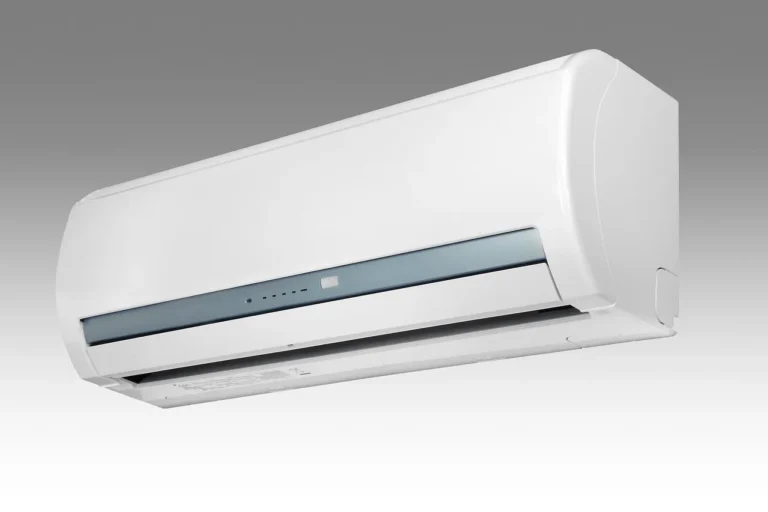
In a split AC unit, the filter is usually behind the front panel on the indoor head. Open the front panel first, then look for one or two washable mesh filters sitting just in front of the coil intake. Many units use slide-out mesh screens that lift free without tools.
Front panel access and filter position
The front panel is the main access point for split systems. Once opened, the filter usually sits in shallow tracks or clips directly behind the intake grille. It is often easy to see because the mesh spans much of the indoor unit’s width.
Split AC filters may need cleaning every 3–6 weeks during heavy use. In dusty or high-use conditions, check it more often. If the panel opens but no filter is visible, a second cover or latch may be blocking access.
What to do if the filter is hidden
-
Open the front panel fully.
Lift or swing the panel until it stays open. Many split units need the panel raised to its stop before the filters can slide out. -
Check for side latches.
Some models have a secondary clip, tab, or small cover over the filter edge. Release that piece before pulling the filter. -
Slide the mesh straight out.
Pull evenly from the frame to avoid bending the mesh or snapping the tabs. If it resists, stop and look for a hidden latch rather than forcing it.
Where is the filter on a window AC?
Window AC filters are usually behind the front panel, and the filter may be visible once that cover opens. Many units place the filter directly behind the front grille, so you can often spot the edge before removal. During peak season, clean it every 3–4 weeks.
Front cover clues and access points
Look for a plastic front cover, grille, or intake panel on the room-facing side of the unit. If the filter is present, it often sits just behind that cover as a flat mesh or screen. On some models, the filter frame is visible through the grille slots before the cover opens.
A common first-timer mistake is pulling on the grille instead of opening the cover. If the cover feels fixed, check for side tabs, a lower latch, or a lift-off panel. The filter should not require force.
Where is the filter on a central air system?
On a central AC system, the filter is often at the return vent rather than on the outdoor condenser. Inspect the return grille or the air handler cabinet first. Central AC filters should be inspected monthly, and disposable filters are usually replaced every 1–3 months depending on filter type and conditions.
Return vent filter locations
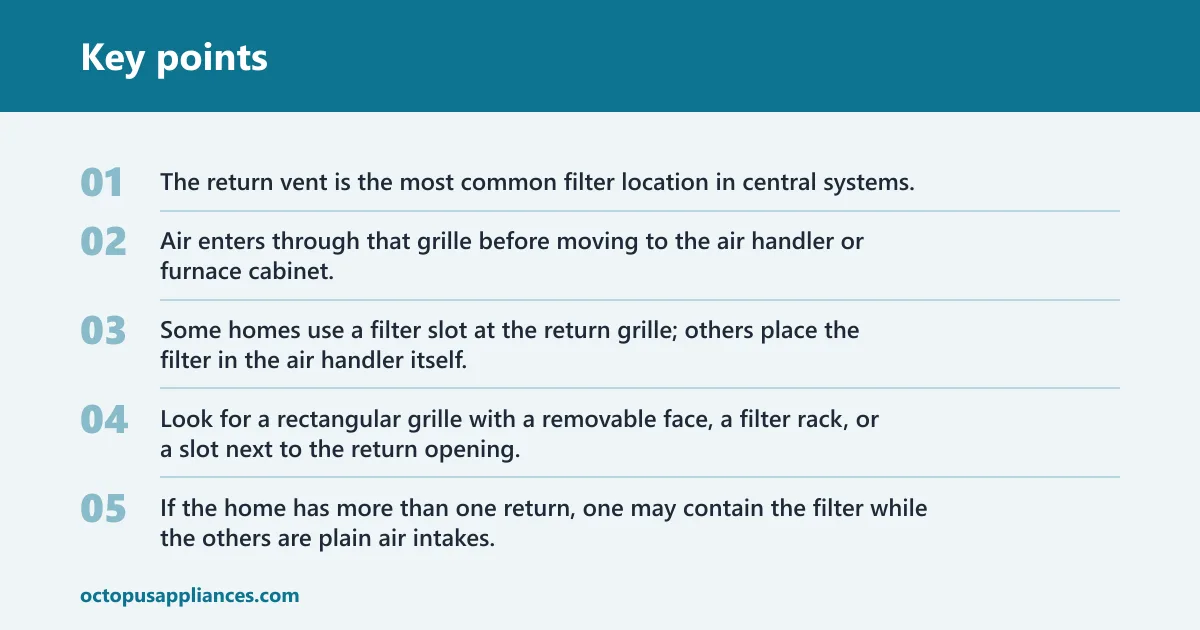
The return vent is the most common filter location in central systems. Air enters through that grille before moving to the air handler or furnace cabinet. Some homes use a filter slot at the return grille; others place the filter in the air handler itself.
Look for a rectangular grille with a removable face, a filter rack, or a slot next to the return opening. If the home has more than one return, one may contain the filter while the others are plain air intakes. Ducted systems use the same basic idea.
Disposable versus washable filters
Pleated filter media in central systems is typically replaced rather than washed. A disposable filter usually has a cardboard frame and printed airflow arrows. Washable filters are less common in central setups, but they do exist and may be cleaned every 2–3 months if the manufacturer allows it.
| Filter type | Typical use | Cleaning or replacement | Visual clue |
|---|---|---|---|
| Washable mesh filter | Split units and some ducted systems | Vacuum, rinse, and air-dry completely | Fine mesh in a reusable frame |
| Pleated filter | Central AC systems | Usually replace rather than wash | Folded paper-like media in a rigid frame |
| Disposable panel filter | Central and ducted systems | Replace on schedule | Cardboard edges, airflow arrow, one-time use |
How do you remove the filter safely?
Turn off the AC before removing the filter. Use the breaker or thermostat shutoff so the fan cannot start while your hands are near the opening. Then remove the filter gently, inspect the frame, and reinstall it in the same direction it came out.
Safe removal and reinstallation steps
-
Shut off power first.
Turn the thermostat off or switch the breaker off before opening any panel. This reduces electrical risk and prevents the fan from starting unexpectedly. -
Open the access point.
Lift the front panel on a split or window unit, or open the return grille or filter slot on a central or ducted system. Use the latch, not force. -
Slide the filter out.
Pull it straight out by the frame. If it sticks, wiggle it lightly; do not bend the media or crease the frame. -
Inspect the frame and arrows.
Check for a flow-direction arrow, tears, heavy dust, or damp spots. The arrow should face the airflow direction when you reinstall the filter. -
Reinstall without gaps.
Seat the filter fully in the track or slot so air does not bypass it. Close the panel or grille only after the filter sits flat.
If the filter is washable, vacuum it first with a brush attachment, then rinse it with water and a mild detergent or dish soap. Let it air-dry completely before reinstalling it. Do not use a hairdryer or direct sunlight, which can warp the frame or damage the mesh.
What if I can’t find the filter behind the front panel?
If the front panel opens and no filter appears, the system may use a return vent filter, a taped slot, or a nonstandard access cover. Some units also rely on aftermarket grille filters added by a previous owner. Stop before forcing the cover, and check the model plate or manual for the access point.
Taped slots, hidden covers, and aftermarket grilles
Look for duct tape, paint lines, or a seam that suggests a sealed slot. Those clues often mean the filter was installed in a custom return cabinet or altered grille. If the grille has clips but no visible filter, there may be a filter behind a second removable panel.
Suppose a return grille in a laundry area has a visible filter frame but the panel will not open more than an inch. That can mean an aftermarket filter grille or a jammed latch. In that case, do not pry hard; check the model plate or call for the correct access method.
When to stop and verify the model
Stop and confirm the unit model if the cover will not open, the filter slot is sealed, or the frame seems nonstandard. The model plate usually gives the unit type and cabinet layout. That is the safest way to avoid breaking a latch, tearing the filter, or removing the wrong panel.
Frequently asked questions
Where is the AC filter located in a split AC unit?
The filter is usually behind the front panel on the indoor unit. Open the panel fully, then look for one or two mesh screens in shallow tracks or clips. If you do not see it right away, check for a second latch or a small cover hiding the filter edge.
How do I remove an AC filter without damaging it?
Turn off power first, then open the front panel or return grille and slide the filter out straight. Do not bend the frame or tug on the media. If it sticks, check for a hidden latch or track rather than forcing it free.
Are all AC filters washable, or do some need replacing?
Not all filters are washable. Washable mesh filters are commonly found in split units and some ducted systems, while pleated filters in central systems are often replaced. If the frame is cardboard or the media is pleated paper, plan on replacement instead of washing.
What should I do if the filter is dirty, torn, or moldy?
If the filter is dirty, clean or replace it based on type. If it is torn, warped, or moldy, replace it rather than trying to patch it. A damaged filter can let dust bypass the media and can leave contamination in the return path.