Is a Washer Dryer Combo Worth It?

A washer dryer combo is often a good fit if space matters more than laundry speed, and you usually dry about one full load at a time. If you wash more than you can dry per cycle, it can become less practical. Push past that limit and you get damp clothes, longer turnaround, and a laundry backlog. This guide compares capacity, drying time, water use, and space so you can judge the trade-off.
Washer dryer combo vs separate units
A washer dryer combo combines a front loading washing machine and a condenser or heat pump clothes dryer in one appliance. That single-appliance layout saves floor space and removes the need to move wet laundry from one machine to another, but it usually gives you less drying capacity than washing capacity.
How separate washers and dryers differ on throughput
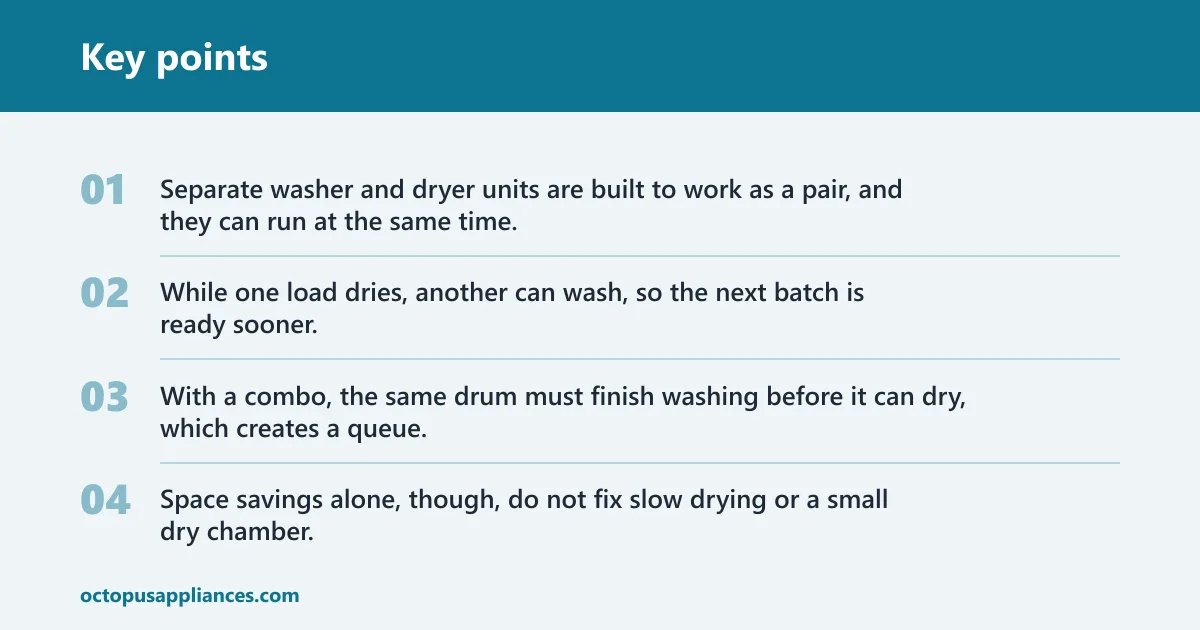
Separate washer and dryer units are built to work as a pair, and they can run at the same time. That matters for throughput. While one load dries, another can wash, so the next batch is ready sooner. With a combo, the same drum must finish washing before it can dry, which creates a queue.
Where the space trade-off matters most
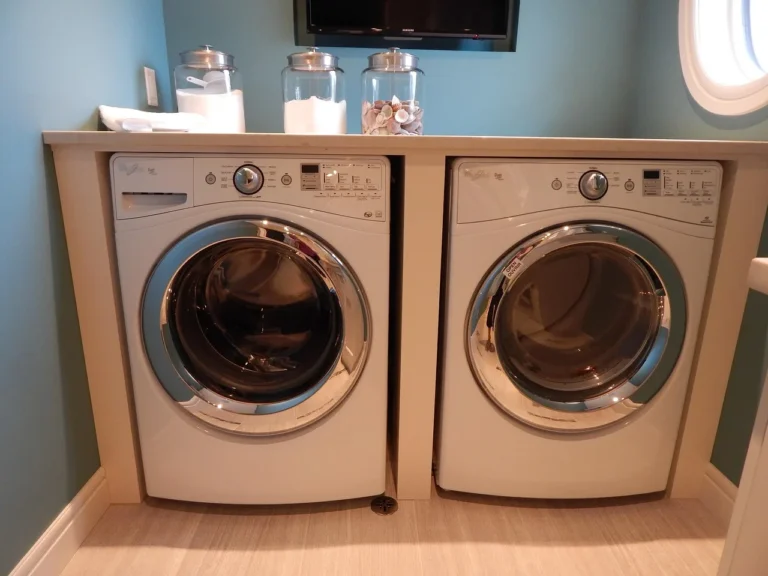
The footprint advantage is real. Tom’s Guide notes that the appliance can save half the space in a laundry room, and some models fit where a full washer-and-dryer pair will not. That helps in small homes, tight utility closets, RVs, and boats. Space savings alone, though, do not fix slow drying or a small dry chamber.
| Option | Space | Wash and dry flow | Best fit | Limit |
|---|---|---|---|---|
| Washer dryer combo | One appliance in one footprint | Wash first, then dry in the same drum | Small homes, RVs, boats, mobility-accessible layouts | Drying capacity is usually lower than washing capacity |
| Standalone washer and dryer | Needs room for two machines | Can wash and dry at the same time | Frequent laundry, larger households, multiple loads a day | Takes more floor space |
Why drying takes longer
Drying takes longer because combo machines trade drum size, heat output, and airflow for compactness. CHOICE says drying capacity is typically half the wash capacity, and drying can take up to 13 hours in some cases. That is a long wait when you need the next load done the same day.
Condenser drying in combos
Most combo machines use condenser technology, and CHOICE says most models use water to dry. The machine passes hot air through the load, condenses the moisture inside the unit, and removes that water during the cycle. It avoids external venting, but it adds complexity and can use more water than many shoppers expect.
Heat pump drying in combos
Heat pump drying is more energy-efficient than condenser drying and does not use water to dry. It is available in more combo models now, and it is the better drying method when you want lower operating cost than a condenser system. It still does not solve the throughput problem, because the drum remains compact.
Spin speed and moisture removal
The highest spin speed should be used whenever fabric care allows it. A faster final spin removes more water before drying starts, which can shorten the dry cycle. That matters because the dryer section in a combo does not have the same drying margin as a larger standalone dryer.
Select the highest safe spin. Use the strongest spin setting the fabric care label allows. Less water left in the drum means less water the dryer has to remove.
Keep loads evenly packed. Uneven loads spin less effectively and leave wetter clothes in the center of the drum. That turns into longer drying time and more wrinkling.
Separate bulky fabrics. Towels and bedding trap more water than shirts or underlayers. If the machine allows a smaller load, split bulky items so the spin cycle can work better.
How load capacity affects worth
The real question is not whether a combo can wash a full load. It is whether it can wash and dry the amount you need without creating a bottleneck. Because drying capacity is often about half of washing capacity, the machine can finish a wash and still leave you with clothes that need to be split into two drying batches.
Same-day laundry bottlenecks
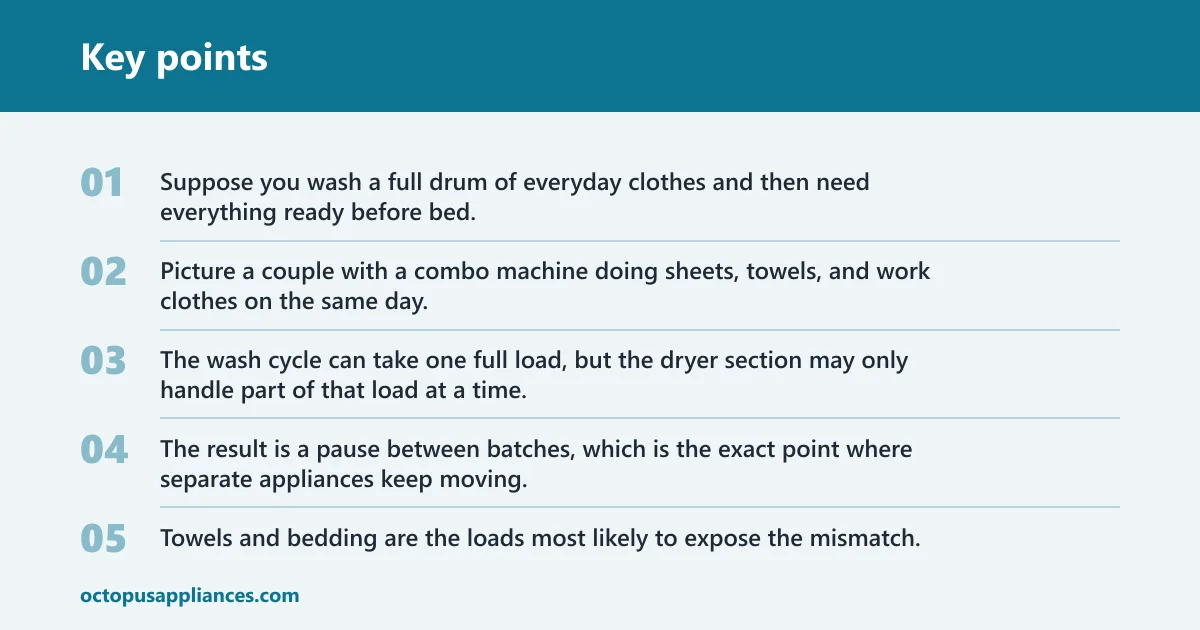
Suppose you wash a full drum of everyday clothes and then need everything ready before bed. If the wash load is larger than the dry load, the machine may need to dry in two rounds or leave part of the load for tomorrow. That turns one laundry session into a backlog, especially when there are multiple loads waiting.
Picture a couple with a combo machine doing sheets, towels, and work clothes on the same day. The wash cycle can take one full load, but the dryer section may only handle part of that load at a time. The result is a pause between batches, which is the exact point where separate appliances keep moving.
Towels, bedding, and other bulky loads
Towels and bedding are the loads most likely to expose the mismatch. They absorb more water and take more time to dry, so a combo’s smaller dry chamber becomes a real limit. If your normal laundry includes bath sheets, duvet covers, or several sets of towels, a separate dryer usually handles the volume better.
Washer dryer combo decision matrix
This matrix focuses on throughput, not just footprint. A “yes” means the combo is usually a good fit for that condition. A “no” means the condition often points to a separate washer and dryer instead.
| Decision factor | When a combo fits | Recommendation | Reason |
|---|---|---|---|
| Household size | One to two people with modest laundry volume | Yes | The load count is usually low enough that slower drying is less disruptive. |
| Drying frequency | You dry one load at a time and do not need fast turnover | Yes | The combo’s single-drum workflow is easier to live with when laundry is occasional. |
| Space constraints | You cannot fit separate machines or a vented dryer | Yes | The one-appliance footprint can solve a real layout problem. |
| Line-drying option | You can use a drying rack or clothes horse for part of the load | Yes | Line-drying reduces demand on the dryer section and softens the capacity mismatch. |
There is also a simple throughput check. If you regularly wash two loads and need both dry the same day, a combo becomes less attractive fast. If you can wash one load, dry that load, and hang a few items on a rack, the machine’s slower cycle matters much less.
Count your weekly loads. If you often do multiple loads a day, start by assuming a combo will slow you down. The bottleneck is drying, not washing.
Match dry capacity first. If the dryer side cannot handle your usual load size, the machine will force split batches. That is where the time penalty shows up.
Check your backup option. If you have a drying rack or clothes horse and enough time to use it, a combo becomes more workable. If not, the machine has to do all the drying work.
Do washer dryer combos suit small homes?
Yes, especially when the small home has one to two residents and limited room for separate appliances. Combos also make sense where venting is difficult or impossible. The key is whether the household can live with longer drying times and a smaller dry load, not whether the unit saves space.
One- to two-person households
For a one- or two-person household, laundry volume is often low enough that a combo can keep up. The best case is one load at a time, light to moderate fabrics, and some willingness to line-dry when needed. If you rarely stack loads back-to-back, the machine’s limits are easier to accept.
Renters and tight utility spaces
Renters often face narrow closets, shared utility rooms, or lease rules that make vented dryers impractical. A ventless combo can fit those spaces without a long duct run. That makes the machine appealing, but only if the unit’s drying pace still fits the household’s schedule.
Mobility-accessibility use cases
For people with mobility limitations, a combo can reduce transfers between appliances and cut down on bending, lifting, and repeated carrying. A front-loading single unit can also be easier to place at accessible height in some layouts. That benefit is strongest when moving laundry between machines is the main barrier.
Choose washer dryer combo if… / Choose separate washer and dryer if…
The right choice comes down to whether throughput or footprint matters more. If you need one appliance in a small space and can tolerate slower drying, a combo can work. If you need faster turnaround, larger loads, or multiple loads in a day, separate units usually make more sense.
Choose a washer dryer combo if…
- You live in a very small home, apartment, RV, or boat.
- You usually wash and dry one load at a time.
- You can line-dry some items on a rack or clothes horse.
- You want fewer transfers between washer and dryer.
Choose separate washer and dryer if…
- You do multiple loads a day or need fast laundry turnaround.
- You have a larger household with towels, bedding, and frequent washing.
- You want to run one load while another dries.
- You do not want the dry side to cap the amount you can finish the same day.
Frequently asked questions
Is a washer dryer combo worth it?
It is worth it when you value space savings and can live with slower drying, lower dry capacity, and one-load-at-a-time laundry. If you often need clothes ready quickly or you wash more than you can dry in one cycle, a combo usually becomes a poor fit.
Is a washer and dryer combo good?
It is good for small homes, limited utility spaces, and households that do light laundry with low daily volume. It is less good for large families or anyone who depends on fast, repeated drying. The answer depends on throughput more than on convenience alone.
Are washer-dryer combos worth it for small apartments?
They can be, especially if the apartment cannot fit separate machines or a vented dryer. A combo works best when you have one to two people’s worth of laundry and can accept long drying cycles. If the apartment also has line-drying space, the fit improves.
Do washer dryer combos take a long time to dry?
Yes. The same source says drying can take up to 13 hours in some cases, and the dry capacity is typically half the wash capacity. That means a full wash load may need more drying time or even more than one dry pass, depending on fabric and spin speed.
Can a washer dryer combo handle full loads?
It can wash a full load, but it often cannot dry that same amount as one full batch. That is the central limitation. If your full loads include towels or bedding, expect the dry side to become the bottleneck and to slow same-day turnaround.
Do washer dryer combos use more water or energy?
Many condenser-style combos use water to dry, so water use can be higher than shoppers expect. Heat pump models are more energy-efficient and do not use water to dry. The exact operating cost depends on the drying method, cycle length, and how often you use the machine.