
Why Is My Dryer Not Drying Clothes in One Cycle?
If clothes are still damp after one cycle, start with airflow. Check the lint screen, vent hose, and outside exhaust first, then look at load size and moisture-sensor contact, because blocked venting, overloaded drums, and sensor misreads are the most common causes. Letting it continue can waste power, wear parts, and leave fabrics damp enough to smell musty. This guide gives you a simple decision tree to sort airflow, sensing, load prep, or weak heat.
What you’ll need
- Vacuum or brush for lint removal
- Lint-free alcohol wipe
- Screwdriver for vent access
- Flashlight
- Dry towel for a quick load test
Dryer drying matrix
| Symptom pattern | Likely cause | First test | Stop DIY when… |
|---|---|---|---|
| Hot but still damp | Restricted airflow, weak heater, or sensor residue | Check lint screen, vent path, and sensor strips | Dryer still heats poorly after airflow checks |
| Needs a second cycle | Overload, long vent run, or low-heat setting | Reduce load to about three-quarters full and raise heat | Repeat failure with a smaller load |
| Towels stay heavy after washing | Washer spin problem or overloaded dryer | Run towels on a high-spin washer cycle first | Towels come out dripping or unbalanced loads recur |
| Sensor ends early | Moisture sensor strips coated with residue | Wipe the strips with a lint-free alcohol wipe | Sensor still shuts off too soon after cleaning |
| No heat and no drying | Heating-element or power-supply problem | Confirm cycle settings and heat selection first | Dryer stays cold or trips repeatedly |
Why does my dryer need a second cycle?
A second cycle usually means the first pass left too much moisture in the load, or too little heat and airflow to finish the job. Common causes include an overloaded drum, clothes entering the dryer still wet from a weak washer spin, or a cycle setting that may be too gentle for towels, denim, or bedding.
Work through the load and cycle first
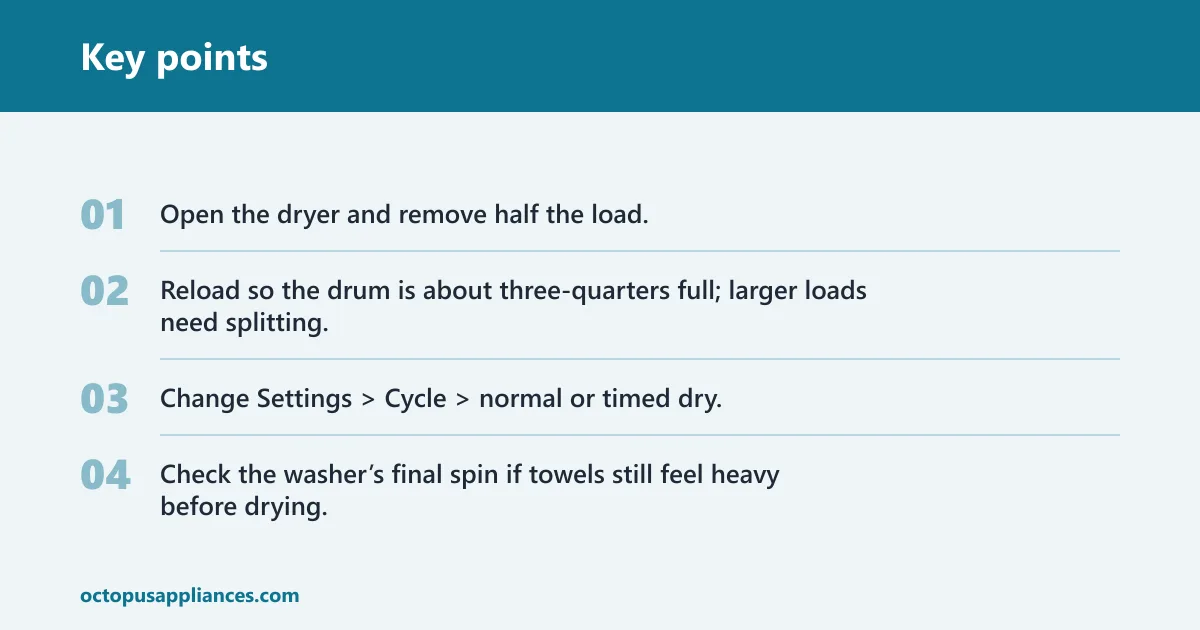
- Open the dryer and remove half the load.
- Reload so the drum is about three-quarters full; larger loads need splitting.
- Change Settings > Cycle > normal or timed dry, then raise heat above delicate or energy-saving choices.
- Check the washer’s final spin if towels still feel heavy before drying.
Say your bath towels fill the drum halfway but still come out cool and damp on delicate. The more likely fix is cycle selection, not a vent problem.
Check airflow first
Airflow restriction is the fastest place to start because a lint screen can look clean while still carrying residue from dryer sheets or fabric softener. That film narrows airflow. A clogged vent or long exhaust run can do the rest, and AHS recommends starting by cleaning the dryer vent, unplugging the dryer, removing the vent pipe from the wall for inspection, and testing again after cleaning.
Inspect the lint filter and vent path
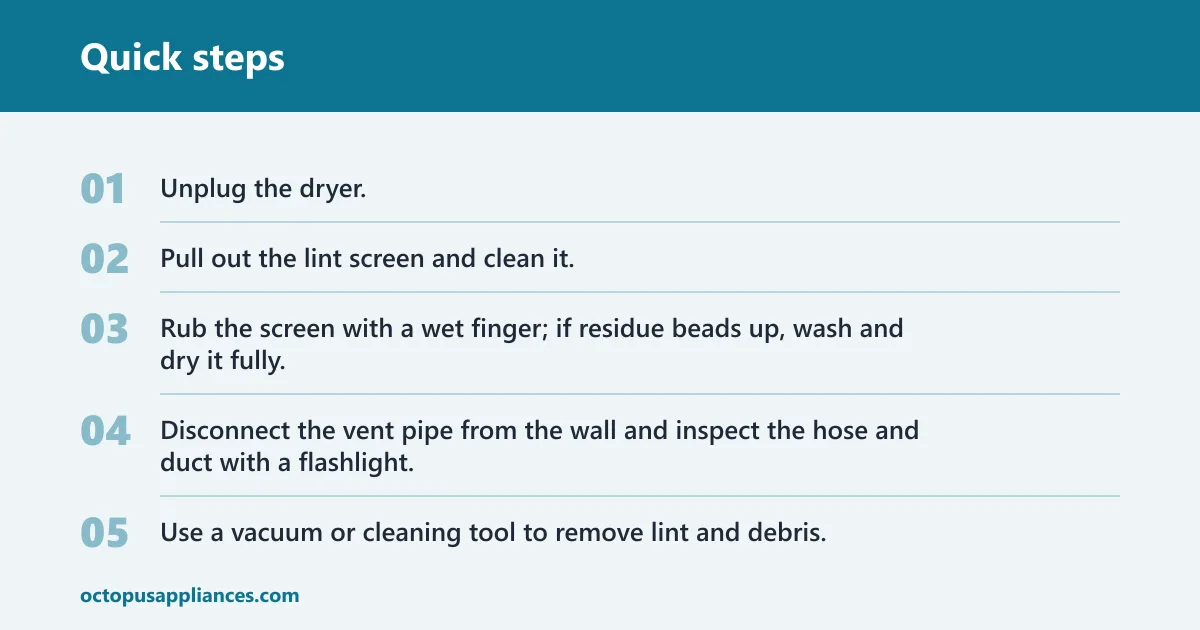
- Unplug the dryer.
- Pull out the lint screen and clean it.
- Rub the screen with a wet finger; if residue beads up, wash and dry it fully.
- Disconnect the vent pipe from the wall and inspect the hose and duct with a flashlight.
- Use a vacuum or cleaning tool to remove lint and debris.
- Check the exterior vent for blockage, flaps stuck shut, or lint buildup.
Check vent length and bends
Long vent runs and multiple 90-degree bends add resistance even when the duct is not packed with lint. Every foot of ducting and every 90-degree turn adds resistance, so a long route to an outside wall can slow drying enough to require another cycle. If the run exceeds the manufacturer’s maximum length, treat that as a practical problem, not a minor detail.
A common first-timer mistake is to clean only the lint screen and leave a crushed hose behind the dryer. The machine can still feel warm and still fail to finish a load.
Why is my dryer hot but clothes stay damp?
Warm air alone does not finish the job. If the dryer gets hot but clothes stay damp, the usual split is between weak airflow, a moisture sensor that shuts the cycle off too soon, or a heating element that still makes some heat but not enough for the load size. A weak blower motor can create the same symptom.
Clean the moisture sensor strips
- Unplug the dryer.
- Find the metal sensor strips inside the drum, usually near the lint filter opening or front bulkhead.
- Wipe both strips with a lint-free alcohol wipe.
- Run a short load on a normal heat setting and see whether the cycle now finishes.
If the sensor was coated with residue, the dryer may stop early even though damp clothing remains. That failure mode is common enough to check before replacing parts.
Escalate to heating or blower checks
- Select Settings > Heat > normal or high for a test load of dry towels.
- Listen for steady airflow at the exhaust while the dryer runs.
- If heat is weak across multiple settings, stop DIY and book service for the heating element.
- If heat seems present but airflow at the exhaust is poor after vent cleaning, suspect the blower motor or hidden duct restriction.
Suppose a dryer heats on timed dry but still needs a second cycle with one bath towel and one hand towel. That pattern points more toward airflow loss or a partial heater fault than toward load size.
Why is my dryer suddenly not drying?
A sudden change often points to a new blockage, a shifted hose, a sensor surface with residue, or a washer issue that may be leaving clothes wetter than before. If the dryer worked last week and now needs multiple cycles, do not assume the dryer itself changed first.
Look upstream before replacing parts
- Check the washer’s spin cycle on a mixed load.
- If the load comes out dripping or heavy, run Spin > High Spin or redistribute the load.
- Inspect the vent hose for a kink or disconnection behind the dryer.
- Retest with a smaller, lighter load before buying parts.
Worn washer parts, an unbalanced load, or a weak final spin can send a too-wet load into a dryer that is otherwise fine. That problem often gets blamed on the dryer because the symptom appears there.
When should you stop DIY?
Stop DIY if the dryer still needs multiple cycles after checking the lint screen, vent hose, outside termination, load size, cycle setting, and moisture sensor. Internal heating-element failures, blower-motor problems, and persistent no-heat symptoms need parts-level diagnosis, not repeated cleaning.
Use this stop point
- Run one test load after cleaning and settings checks.
- If the same symptom returns immediately, stop opening panels.
- Book service if the dryer has no heat, overheats oddly, or shows repeat failures after airflow checks.
- Bring the symptom pattern: hot but still damp, sensor ends early, or needs a second cycle.
What to do when your dryer isn’t drying?
Start with the shortest path to the cause: unplug the dryer, clean the lint screen, inspect the vent path, check the outside exhaust, then confirm the load is not too large and the cycle is not too gentle. After that, move to sensor cleaning and heat checks. A logical sequence saves time.
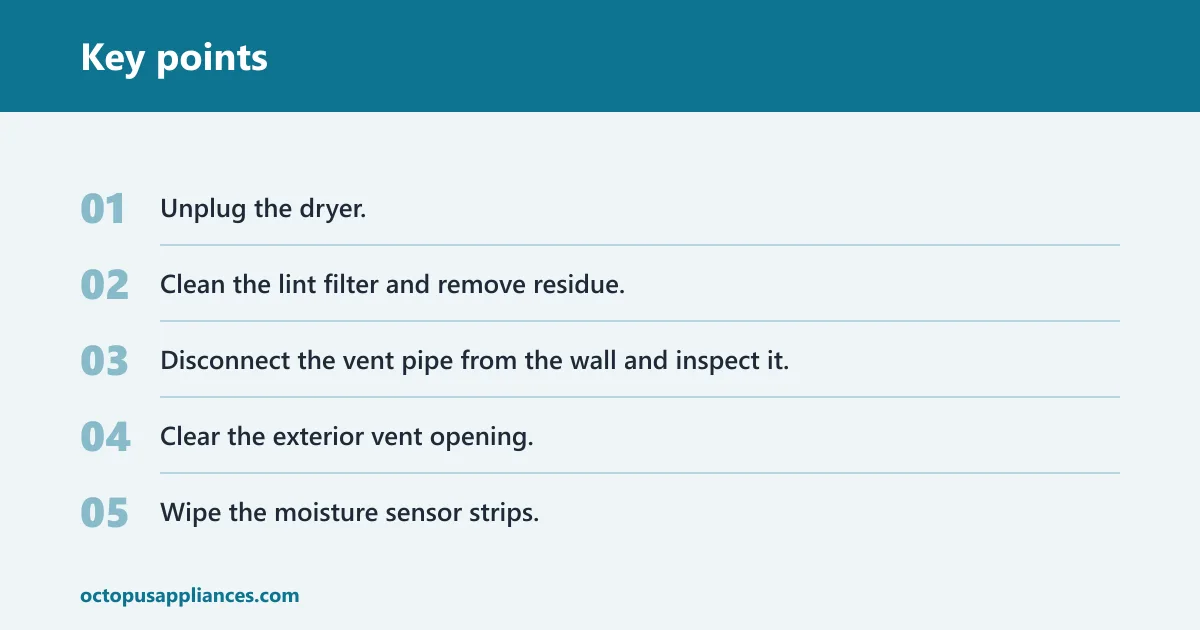
- Unplug the dryer.
- Clean the lint filter and remove residue.
- Disconnect the vent pipe from the wall and inspect it.
- Clear the exterior vent opening.
- Wipe the moisture sensor strips.
- Reduce the next load and rerun it on a normal or high-heat setting.
Common mistakes
- Cleaning only the lint screen and ignoring the duct behind the dryer.
- Using delicate or energy-saving settings for heavy towels or bedding.
- Overfilling the drum past about three-quarters full.
- Assuming the dryer is the problem when the washer spin left the load too wet.
- Replacing parts before checking the vent run length and bends.
Frequently asked questions
Why is my dryer not drying clothes in one cycle?
The usual reasons are restricted airflow, too much laundry in the drum, or a moisture sensor that ends the cycle early. Start with the vent system, then check whether the load is about three-quarters full or less, and finish by wiping the sensor strips with a lint-free alcohol wipe.
Why is my dryer taking three cycles to dry clothes?
Three cycles usually points to a mix of weak airflow and a load that starts off too wet. Check whether the vent hose is clogged, whether the outside vent opens fully, and whether the washer’s spin cycle is leaving the load heavy before drying. Large loads may also need to be split.
Why is my dryer not drying clothes but getting hot?
That pattern usually means heat is present but air movement or moisture sensing is off. Clean the vent, wipe the sensor strips, and test with a smaller load on normal heat. If the dryer still feels warm yet leaves clothes damp, a weak heating element or blower motor becomes more likely.
Why is my dryer not drying after cleaning the vent?
If vent cleaning did not fix it, the next suspects are the moisture sensor, the washer spin, or a partial heat problem. Wipe the sensor strips, check that the load is not overloaded, and retest on a higher heat setting. If the same symptom remains, stop DIY and schedule service.
Why is my dryer not drying and has no heat?
Start by confirming the cycle and heat selection, then check power and control settings. If the dryer still has no heat after that, the problem is more consistent with an internal heating-element, thermostat, or power-supply fault than with a simple airflow restriction. That is the point to book repair.