
Why Is My Vacuum Not Sucking Even After Emptying It?
If a vacuum still has weak suction after emptying it, inspect the hose, wand, filter set, brushroll, and bin seals first. A blocked airflow path, a stalled brushroll, or a leak at the hose, bin, or gasket can leave dirt behind and put extra heat into the motor. This guide gives you a fast diagnostic path to separate airflow problems, brushroll drive problems, and seal leaks.
Vacuum troubleshooting matrix
Use this matrix before replacing parts. It separates a true airflow problem from a floor-pickup problem, which are not the same thing.
| Symptom | Likely cause | Quickest test | Next fix |
|---|---|---|---|
| Suction weak at hose | Hose, wand, or internal airflow path blocked | Disconnect both ends and check for a blockage with a small firm object | Clear the obstruction or replace a collapsed hose |
| Suction weak only on carpet | Brushroll not spinning, belt slipping, or height setting wrong | Lift the vacuum slightly and confirm the brushroll turns on power | Remove wrapped debris, then inspect the belt and brushroll drive |
| Vacuum runs but brushroll does not spin | Broken or stretched belt, jammed brushroll, or drive fault | Switch off, unplug, and check for wrap, then check belt tension | Clean the roll, replace the belt, or service the drive |
| Vacuum smells hot | Restricted airflow, stalled brushroll, or overloaded motor | Stop it and check filters, hose, and brushroll for blockage | Clear airflow restrictions before using it again |
| Suction dropped right after emptying | Bin or bag not seated, bypass leak, or hidden clog | Reseat the bin or bag and inspect the seal path | Reinstall correctly, then check for clogs upstream and downstream |
Why suction can stay weak after emptying
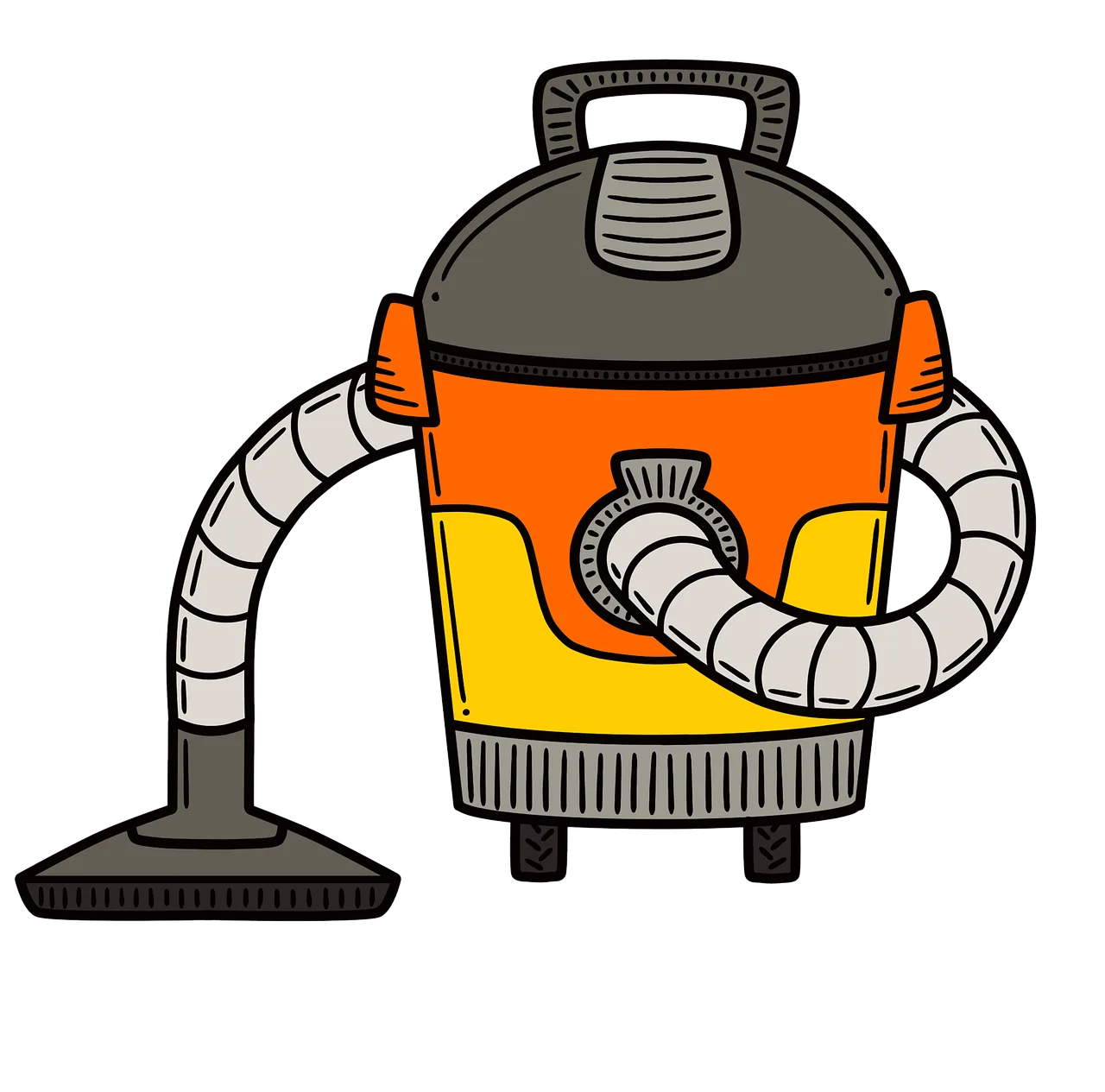
Emptying the dust bin or changing the bag does not restore suction if air still cannot move through the machine. A poor seal, a hidden clog, or a full filter can keep performance low even when the bin looks clear. On some vacuums, a bag or dirt cup more than 2/3 full can cause a dramatic drop in performance.
Dust bin or bag seating matters
Proper seating matters because air will take the easiest path. If the bin or bag is not locked in place, dust can bypass the intended path, and suction at the floor drops fast. A full-seeming bin can also reduce pickup even when it was just emptied if debris is packed around the opening or seal.
Hidden restrictions remain after emptying
Emptying the bin only addresses one part of the system. The hose, wand, internal passages, and filters can still be packed with debris. That is why the machine may still turn on normally while pickup stays weak.
Say your upright vacuum empties cleanly, but a few minutes later it still leaves crumbs on carpet. If the hose is partly blocked and the brushroll is stalled by hair, the bin will not fix either problem. You need to separate airflow loss from floor-contact loss.
Why a full-seeming bin can still reduce airflow
Some debris compacts into a dense layer that blocks the inlet before the cup looks full. That is common with fine dust, pet hair, and lint. If the suction improves after you shake loose the load or reseat the bin, the problem was not the motor.
Is the hose or wand blocked?
Yes, and this is one of the first places to check. A hose can be blocked even when the vacuum still runs and sounds normal, which means suction can be strong at the machine but weak at the floor.
Check both ends after disconnecting
Disconnect the hose from both ends. Look for toys, hair, and packed debris at the ends before checking farther in. A clogged hose can be tested by dropping a small firm object through it; if the object does not pass through, the hose is likely blocked.
Use the hose itself to confirm airflow loss
Hold the hose up to a light and compress it gently. A soft collapse, a kink, or a hidden blockage will reduce airflow sharply. If suction feels normal at the main body but weak at the wand or floor head, the blockage is likely downstream from the motor.
A clogged hose can cause the vacuum to sound normal while air does not reach the floor tool. It is a common failure point because the vacuum can sound normal while air never reaches the floor tool.
Check the wand and internal path
The wand can trap dense clogs where the tube narrows or bends. Clear both the hose and the wand before moving on. If the blockage is farther inside the machine, the symptom often stays the same after emptying the bin.
- Turn the vacuum off and unplug it.
- Remove the hose and wand.
- Check both ends for lodged debris.
- Use the small firm object test on the hose.
- Reconnect only after airflow is clear.
Are the filters causing the problem?
Yes. Dirty filters are a common reason a vacuum still feels weak after the bin is empty. Some vacuums have multiple filters, including pre-motor, exhaust, and HEPA filters. A clogged filter can reduce airflow, and reduced airflow can reduce suction.
Pre-motor filter checks
The pre-motor filter protects the motor from fine dust. When it clogs, suction often drops before the machine fully fails. If you notice weak pull plus warmer-than-normal running, check this filter early.
Exhaust and HEPA filter checks
Exhaust and HEPA filters can also restrict flow if they are packed with dust. Some are washable, some are not. Do not assume every filter should be rinsed. Model-specific guidance matters here.
Some Dyson vacuums have two filters, with one never needing washing. Dyson recommends V11 users wash the filter unit at least once a month, and the cleaning step is to use cold water. The support path also directs users to find the serial number before checking maintenance guidance.
Washable versus non-washable filters
Use the owner’s manual or model number to identify the filter type before cleaning anything. That prevents damage to non-washable parts and keeps you on the right maintenance schedule. A wrong cleaning method can make suction worse.
When a dirty filter mimics a motor problem
A vacuum motor may seem weak when the actual issue is a clogged filter path. If the vacuum runs but suction is poor, airflow path problems come before motor or electronics problems. Only after hose, filter, brushroll, and seal checks should you suspect the motor itself.
Brushroll and belt checks
Weak suction on carpet is often a brushroll or belt issue, not a true suction failure. If the machine picks up better on hard floors than on carpet, the brushroll may not be turning or may be turning too slowly.
Hair and string wrapped around the brushroll
Hair, string, and debris often wrap around the brushroll and stop it spinning properly. That reduces agitation, which hurts pickup on carpet first. Clear the roll fully, including the ends where thread often packs tightly.
Picture a vacuum that still pulls dust from tile but leaves pet hair in a low-pile rug. If the hose is clear and the filter is clean, a stalled brushroll is a better fit than a suction problem. The air may still move, but the carpet fibers are not being lifted.
Broken or stretched belt symptoms
A broken or stretched belt can prevent the brushroll from rotating. If the vacuum runs but the brushroll does not spin, the belt is a top suspect. On some models, this is a simple DIY replacement. On others, access is more involved, so the manual matters.
Why carpet pickup fails before bare-floor pickup
The vacuum can still move dirt on hard floors even with a weak brushroll, because the suction path alone can lift loose debris. Carpet needs agitation and airflow together. That is why a belt or brushroll problem often shows up as weak carpet pickup before anything else.
Air leaks and worn seals
Loose connections and worn seals let air escape before it reaches the cleaning head. That can mimic a clog or a weak motor. It also explains suction that seems intermittent, especially when a hose flexes or a bin shifts in its cradle.
Loose connections at the wand, hose, or bin
Check the joints where parts lock together. A loose connection at the hose, wand, or dust bin can bleed off enough airflow to matter. If suction changes when you wiggle a connection, that points to a leak rather than a deep clog.
Worn gaskets and seals
Gaskets harden, flatten, and crack over time. That creates a path for air to escape. If a reseated bin works for a minute and then suction fades again, inspect the seals closely.
Intermittent suction from small leaks
Small leaks can be hard to spot because the vacuum still runs and may sound close to normal. Look for dust trails around the seams, a poor fit at the filter cover, or a bin that does not click fully into place.
Use the manual and model number first
The owner’s manual and model number tell you which filters you have, how to access the belt, and how often maintenance should happen. That matters because one model may have a washable filter while another has a filter that should be replaced, not rinsed.
What to confirm in the manual
- Filter type and whether each filter is washable.
- How to remove the hose, wand, and floor head.
- How to reach the brushroll and belt.
- Any cleaning interval listed for your exact model.
- Whether the dust bin or bag has a specific seating step.
Some Dyson models require removing the roller plate, which may involve three bigger screws. That is one more reason to identify the exact model before you open anything up.
When to repair or replace
If basic airflow, filter, belt, and seal checks fail, the motor or electronics may be the issue. Before paying for repair, compare the likely part cost with the cost of a replacement vacuum of similar type. For many homeowners, a broken belt or clogged filter is worth fixing, but a failed motor on an older machine often is not.
Practical decision point
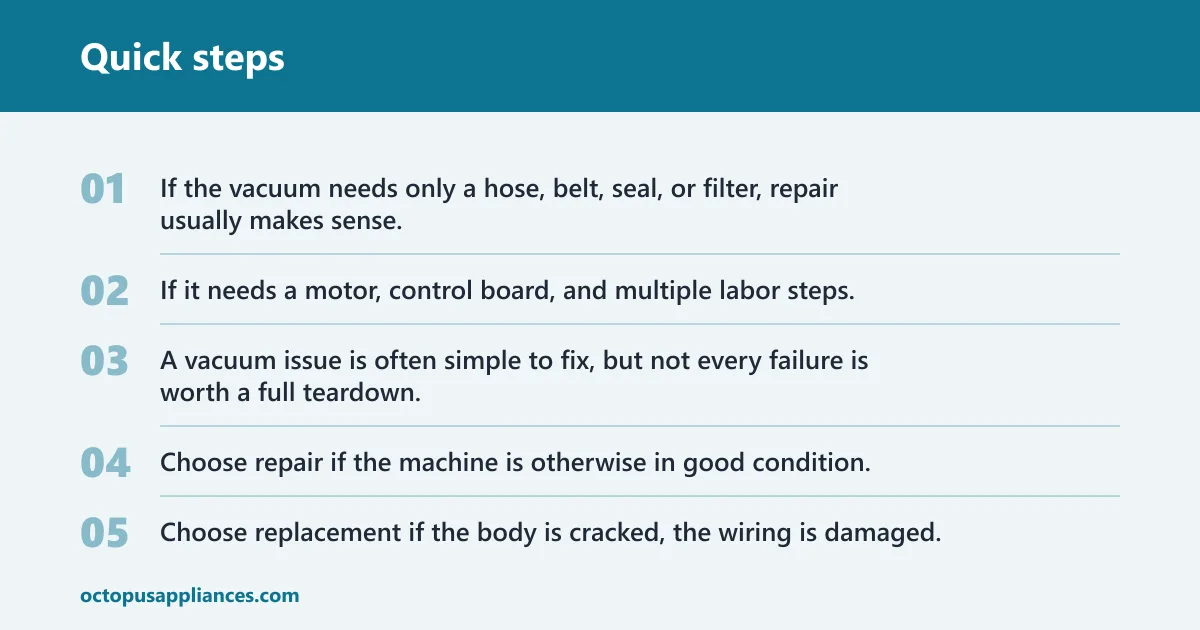
If the vacuum needs only a hose, belt, seal, or filter, repair usually makes sense. If it needs a motor, control board, and multiple labor steps, replacement may be the better value. A vacuum issue is often simple to fix, but not every failure is worth a full teardown.
When professional repair makes more sense
Choose repair if the machine is otherwise in good condition, has a replaceable belt or hose, and the problem stays localized. Choose replacement if the body is cracked, the wiring is damaged, or the machine still has weak suction after all the basic checks and the repair estimate keeps climbing.
Frequently asked questions
Why is my vacuum not sucking even after emptying it?
Emptying the bin removes only one possible restriction. If the hose, wand, filter, brushroll, or seals are still blocked or leaking, suction stays weak. A common troubleshooting order is to start with airflow, then check the brushroll drive, then inspect the seals. That order avoids replacing the wrong part.
Why isn’t my vacuum sucking?
The most common causes are a blocked hose, dirty filter, full or poorly seated bin, stalled brushroll, or air leak. If the vacuum runs but still will not pick up dirt, the airflow path is the first place to check. The motor is usually not the first suspect.
Why my vacuum has no suction?
No suction usually points to a major airflow restriction, a large leak, or a detached hose or bin connection. Check both ends of the hose, then the filters, then the brushroll and belt. If those all check out, the problem may be internal or electrical.
Why isn’t my vacuum picking anything up?
If pickup is poor on carpet but better on hard floors, focus on the brushroll and belt. If pickup is poor everywhere, focus on the hose, filters, and seals. That split helps you avoid treating a floor-contact problem like a suction problem.
What if my vacuum turns on but won’t pick up dirt?
That usually means the motor is running, but air is not moving well enough or the brushroll is not agitating the floor. Check for clogs, then filter blockage, then a stalled brushroll or belt failure. A running motor does not prove the airflow path is clear.
When should I repair or replace a vacuum with weak suction?
Repair is usually sensible for a clogged hose, dirty filter, broken belt, or worn seal. Replace the vacuum if it needs major motor or electronics work, or if multiple worn parts push the repair estimate too close to the price of a new machine.